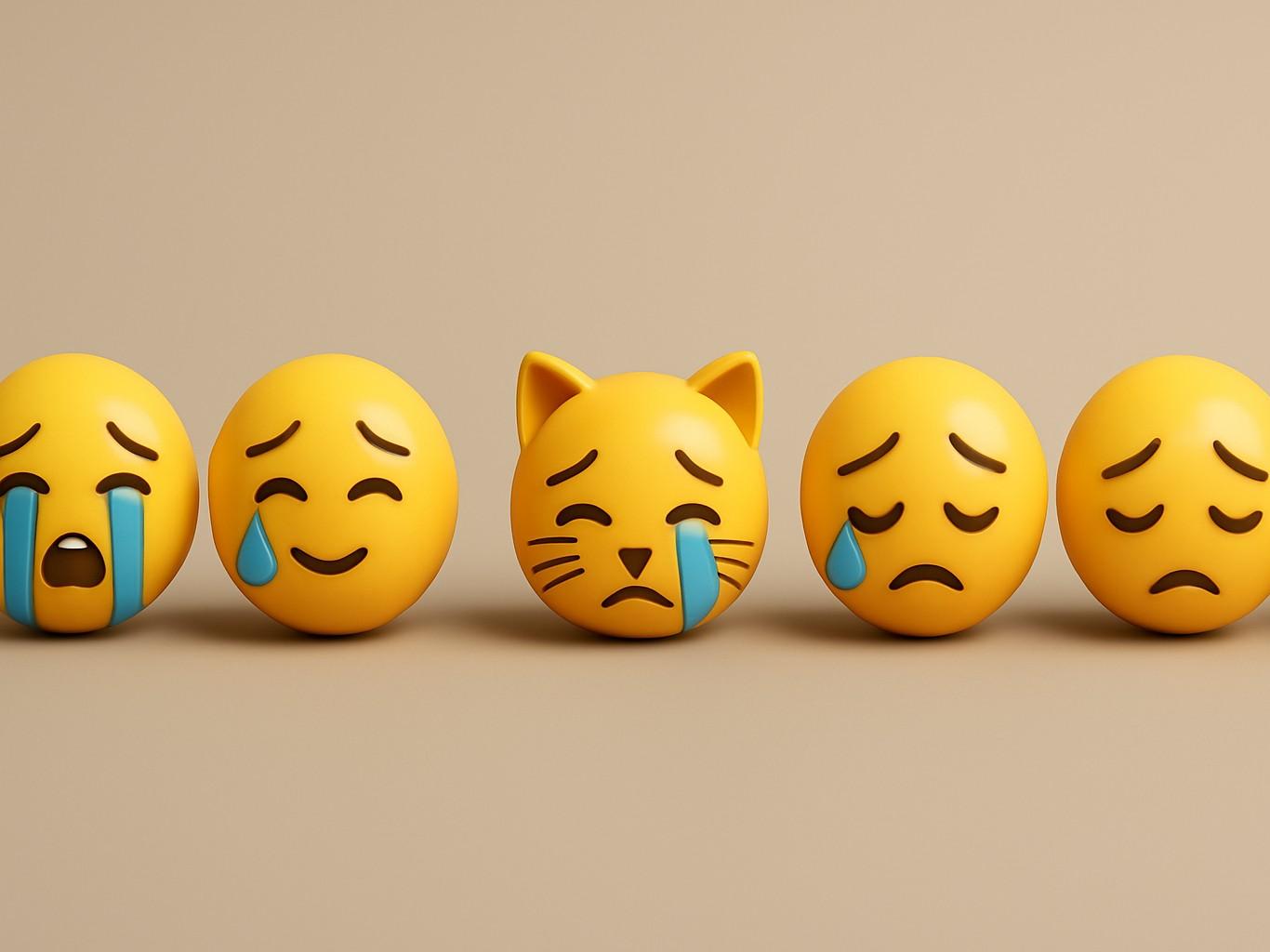
Few symbols online carry as much emotional range as a single tear. In the ocean of emojis that flood our screens daily, the crying faces — 😢, 😭, 🥲, and their feline cousins — hold a peculiar spot. They’re tiny yet powerful, instantly recognizable, and capable of expressing everything from heartbreak to ironic laughter.
If we scroll through social media today, tears dominate. Data from social platforms consistently rank 😭 (Loudly Crying Face) among the most used emojis in the world. Even as new faces and symbols appear every year, people keep turning to this one — not just to cry, but to say something deeper about how they feel.
The crying emoji has evolved from a straightforward expression of sadness into a cultural shorthand for humor, empathy, frustration, and emotional exaggeration. It’s both intimate and performative, a digital tear that speaks across cultures and contexts.
The Main Crying Emojis: A Gallery of Digital Tears
Let’s break down the main characters in this emotional cast — each with its own shade of sorrow, nostalgia, or melodrama.
Table with brief description Crying Emojis
Emoji | Name | Meaning / Usage | Emotional Tone |
|---|---|---|---|
😢 | One tear, mild sadness or empathy. Used for bad news or tender moments. | Gentle melancholy | |
😭 | Streams of tears, dramatic sadness or exaggerated emotion — often humorous. | Intense or over-the-top | |
🥲 | Bittersweet feeling — gratitude, nostalgia, or quiet sadness. | Nuanced, mixed emotion | |
😿 | Cute or ironic version of 😢, common in memes. | Soft sorrow, playful pity | |
😥 | Tear with sigh — relief after stress or near-mistake. | Reflective, subdued | |
😓 | Fatigue or worry, sometimes mistaken for crying. | Drained or apologetic | |
😔 | Quiet reflection, regret, or empathy without tears. | Soft melancholy |
Detailed description Crying Emojis
😢 Crying Face
Meaning: A single tear slides down the cheek of a frowning face.
Usage: Typically represents genuine sadness, disappointment, or empathy. You’ll often see it in responses to bad news, heartfelt confessions, or emotional stories.
Emotional undertone: Gentle melancholy — it’s the emoji equivalent of a quiet sigh or a soft “oh no.”
😭 Loudly Crying Face
Meaning: Eyes squeezed shut, mouth wide open, streams of tears flowing.
Usage: The drama queen of emojis. It can show real heartbreak, but more often it signals exaggerated emotion — sadness so big it turns comic. People use 😭 when they’re laughing too hard, missing someone deeply, or being playfully over-the-top.
Emotional undertone: Intense — but not always literal. 😭 is just as likely to mean “I can’t believe this!” as “I’m devastated.”
🥲 Smiling Face with Tear
Meaning: A small smile with one tear, symbolizing bittersweet feelings.
Usage: Introduced more recently, this emoji perfectly captures complex emotions — gratitude mixed with sadness, nostalgia, or relief. It’s used when words fall short, like saying “I’m okay, but not really.”
Emotional undertone: Nuanced — somewhere between “thank you” and “I might cry.”
😿 Crying Cat Face
Meaning: A feline version of 😢.
Usage: Adds a touch of cuteness or irony to sadness. Often used in fandoms, memes, or casual chats where the sadness is sincere but playful.
Emotional undertone: Soft sorrow or dramatized pity — sadness with whiskers.
😥 Disappointed but Relieved Face
Meaning: Downcast eyes, a tear, and a small sigh.
Usage: Represents a mix of relief and sadness, like when something almost went wrong. Think: “I thought I failed, but it’s okay now.”
Emotional undertone: Reflective and subdued — emotional recovery after stress.
😓 Downcast Face with Sweat
Meaning: A weary expression with a sweat drop.
Usage: Often mistaken for a crying emoji, but it usually implies fatigue, worry, or embarrassment. Still, it can express emotional exhaustion — a cousin to crying rather than a direct tear.
Emotional undertone: Drained, apologetic, or mentally tired.
😔 Pensive Face
Meaning: Downturned mouth and eyes — no tears, just contemplation.
Usage: The quiet sadness emoji. Used for moments of reflection, regret, or empathy.
Emotional undertone: Soft melancholy — emotional weight without dramatics.
What Makes Them Different?
😢 vs 😭 — The Scale of Sorrow
The difference between these two is intensity. 😢 is sadness contained — one tear, one emotion. 😭 is full emotional release, both tragic and comedic. The first is cinematic in a minimalist way; the second is an operatic performance.
When someone texts, “I miss you 😢,” it sounds heartfelt. “I miss you 😭😭😭,” on the other hand, sounds like they’re sprawled on the floor — or joking about being that emotional. The shift from one to the other marks the line between empathy and meme culture.
🥲 — The Ambiguous Tear
Unlike its predecessors, 🥲 isn’t about pure sadness. It captures the emotional gray zone: smiling through difficulty, gratitude tinged with pain, or joy mixed with melancholy. Its subtlety makes it deeply modern — we live in a world that values emotional honesty but also self-awareness.
😿 — When Cats Cry
The crying cat is both a meme and a symbol of exaggerated sensitivity. Online, people use it when something is “too cute” or “too painful” in a melodramatic, almost theatrical sense. The cat versions (😿, 🙀, 😾) add a layer of humor to emotional expression, turning digital tears into something adorable.
Sincerity vs. Irony
In digital culture, sincerity and irony coexist. 😭 can mean “I’m genuinely upset” or “This is so funny I’m crying.” The same emoji that expresses heartbreak in one post can represent hysterical laughter in another. This duality keeps crying emojis alive — they’re flexible, emotional chameleons.
Combining Crying Emojis: Emotional Chemistry
Emoji combinations are like emotional recipes — mix the right symbols, and you get a whole new flavor.
😭💔 — the universal heartbreak formula. Used in posts about loss, breakups, or emotional art.
😢💬 — sadness related to words or communication; a reaction to bad news or harsh comments.
😭😭😭 — the hyperbolic cry. The repetition amplifies emotion, sometimes to absurdity. It’s the digital equivalent of sobbing loudly for comedic effect.
🥲✨ — bittersweet acceptance, used when saying goodbye or reflecting on something emotional yet beautiful.
😿🕯️ — often appears in memorial or tribute posts online, combining grief and tenderness.
Meme culture thrives on these combinations. The phrase “crying in the club like 😭” became part of digital slang to describe ironic suffering — pain dressed as a punchline. It’s humor as coping mechanism, with tears as decoration.
How Different Cultures and Platforms Use Them
Emojis don’t always mean the same thing everywhere. Cultural context shapes emotional expression — and that extends to crying online.
Western Context
In much of the Western internet, 😭 has drifted far from literal sadness. It’s a go-to symbol for intense reactions — laughter, shock, exaggeration. It’s common to see “I’m crying 😭😭😭” attached to a funny meme or awkward story. Tears have become shorthand for being “emotionally overwhelmed,” not necessarily sorrowful.
Eastern Context
In many Asian online spaces, crying emojis retain more sincerity. 😭 and 😢 are often used in emotional storytelling, fan messages, or supportive responses. The expression of sadness online aligns more closely with empathy and shared sentiment, rather than humor.
Platform Differences
Platform design also plays a role. The way an emoji looks on one device can shift its meaning. A softer tear shape might make 😢 look sympathetic, while a bold blue stream might seem exaggerated. Over time, users adapt — communities form shared interpretations that go beyond Unicode’s descriptions.
The History and Evolution of Crying Emojis
The earliest crying emojis emerged in the early 2000s, when emoji sets from Japan began to spread internationally. The Unicode Consortium later standardized them, allowing consistent display across devices. 😢 (Crying Face) and 😭 (Loudly Crying Face) were among the earliest emotional icons to be encoded.
Their visual evolution tells a quiet story of changing aesthetics. Early versions were pixelated, with minimal expression. Over time, designs became rounder, more expressive, and more “human.” The tear got brighter, the mouth wider, the emotion clearer.
🥲 (Smiling Face with Tear), introduced much later, reflected a cultural shift — from binary emotions to layered ones. It captured the bittersweet, self-aware emotional tone of modern communication: sadness mixed with strength.
Each new generation of emoji designers refines the look of tears, trying to make them more relatable while keeping their symbolic simplicity.
Fun Facts: Tears in the Age of Memes
The Meme Power of 😭
Few emojis have achieved meme status like 😭. It’s often paired with random text or exaggerated situations — “Me after eating one fry 😭,” or “When the Wi-Fi disconnects 😭😭😭.” The humor lies in overreaction — turning emotional drama into comedy.
Emotional Demographics
Studies of emoji usage have found some intriguing patterns. Crying emojis tend to appear more frequently in posts by younger users, particularly teens and young adults, who use them to express intensity or sarcasm. Older users, meanwhile, gravitate toward simpler sadness symbols like 😢 or 😔 for genuine empathy.
Gender can play a role too, though not always predictably. Some research suggests women use emotional emojis slightly more often, while men may use 😭 humorously rather than sincerely. Still, the overall picture is less about gender and more about social context — online tone is shaped by community norms rather than biology.
The Paradox of Digital Tears
Ironically, the crying emoji often represents moments of joy. People say, “I’m crying 😭” not because they’re sad, but because they’re so entertained or touched. This emotional inversion — using tears to express laughter or awe — reveals something essential about digital communication: we use symbols not for what they literally mean, but for how they feel to send.
The Crying Cat Renaissance
The crying cat (😿) found a second life in meme culture, especially in the “sad cat” genre — photos of cats with edited tears became viral symbols of mock despair. Over time, the emoji version joined the meme vocabulary, blurring the line between text and image culture.
Why Crying Emojis Still Matter
Despite countless updates to emoji libraries, the crying faces remain at the emotional center of online life. They bridge the gap between text and feeling — between what we type and what we mean.
They allow emotion without vulnerability. Sending 😢 says “I feel something” without revealing too much. Sending 😭 says “I’m in this moment fully” — whether that’s joy, grief, or absurdity. In digital spaces where tone is hard to read, crying emojis soften communication, reminding us that emotion still lives behind the screen.
Even as languages evolve and platforms change, the image of a tear endures. It’s ancient — tears have always been a universal human sign — but now they exist in pixels.